Riassunto puntate precedenti:
Una chiacchierata su questo articolo:
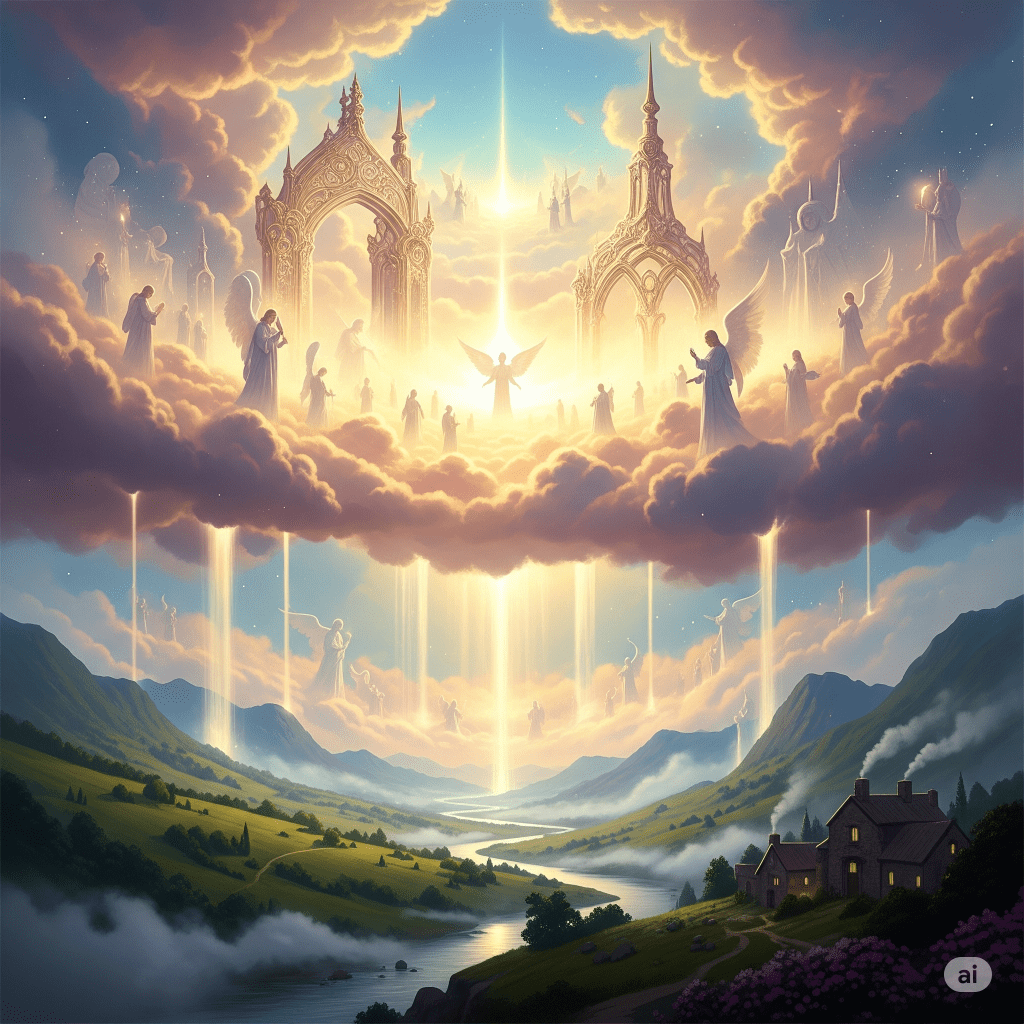
I Due Regni: Regno dei Cieli e Mondo Terreno
Una riflessione teologica tra Bibbia, Padri della Chiesa e spiritualità cristiana
Quando Gesù si trovò davanti a Pilato, nelle ore cruciali della sua passione, pronunciò parole che avrebbero attraversato i secoli: “Il mio regno non è di questo mondo; se il mio regno fosse di questo mondo, i miei servitori combatterebbero perché io non fossi dato nelle mani dei Giudei; ma ora il mio regno non è di qui” (Giovanni 18:36). In questa dichiarazione apparentemente semplice si nasconde uno dei più profondi misteri della fede cristiana: la distinzione tra due dimensioni dell’esistenza che, pur rimanendo distinte, si intrecciano continuamente nella vita del credente.
Ma cosa significa realmente questa distinzione? E soprattutto, come possiamo comprendere e vivere questa tensione tra Regno dei Cieli e mondo terreno nella nostra esperienza quotidiana?
I Fondamenti Biblici: Due Regni, Una Stessa Storia
La Sacra Scrittura ci offre una prospettiva ricca e sfaccettata su questa duplice realtà. Il Regno dei Cieli, annunciato da Gesù sin dall’inizio del suo ministero pubblico, non si presenta come una fuga dal mondo, ma piuttosto come una nuova dimensione che irrompe nella storia umana. Quando Gesù proclama: “Il tempo è compiuto e il regno di Dio è vicino; convertitevi e credete al vangelo” (Marco 1:15), non sta parlando di un futuro remoto, ma di una realtà già presente e accessibile.
Le parabole del Regno ci aiutano a comprendere questa dinamica. Nella parabola del seminatore (Matteo 13:1-23), vediamo come il seme della Parola di Dio cada su terreni diversi – alcuni sterili, altri fertili – rappresentando i cuori umani e la loro capacità di accogliere il Regno. Allo stesso modo, la parabola del tesoro nascosto (Matteo 13:44) ci mostra che il Regno è un valore supremo, tale da giustificare la vendita di tutto ciò che si possiede per ottenerlo.
Tuttavia, sarebbe un errore interpretare questi due regni in termini dualistici, come se fossero due realtà completamente separate e in conflitto. Piuttosto, il Regno dei Cieli si manifesta attraverso il mondo terreno, trasformandolo dall’interno. Come ci ricorda Luca, il regno di Dio “non viene in modo da attirare l’attenzione… ecco, il regno di Dio è in mezzo a voi” (Luca 17:20-21).
Questa presenza nascosta ma reale del Regno nel mondo trova la sua espressione più chiara nel comandamento di Matteo: “Cercate prima il regno di Dio e la sua giustizia” (Matteo 6:33). Non si tratta di abbandonare le responsabilità terrene, ma di orientare tutta la vita verso una priorità che trascende le preoccupazioni immediate.
La Visione Dottrinale: Il Regno nella Teologia della Chiesa
La tradizione teologica cattolica ha approfondito questa intuizione biblica sviluppando una comprensione sistematica dei due regni che trova la sua sintesi nel Catechismo della Chiesa Cattolica. Secondo il magistero ecclesiale, il Regno di Dio è già presente in mistero nella Chiesa, ma si compirà pienamente solo alla fine dei tempi. È un regno di santità, grazia e amore divino, non di potere terreno o politico.
Questa duplice temporalità – il “già” e il “non ancora” del Regno – spiega la tensione che ogni cristiano vive quotidianamente. Da un lato, attraverso i sacramenti del battesimo e dell’eucaristia, partecipiamo già alla vita divina e viviamo un “anticipo” del Regno celeste. Dall’altro, sappiamo che la piena realizzazione di questa realtà avverrà solo dopo la morte, attraverso il giudizio particolare e la possibile purificazione del purgatorio, fino all’ingresso definitivo nel paradiso.
San Tommaso d’Aquino, il grande dottore della scolastica, ha fornito a questa intuizione una struttura teologica rigorosa. Nella sua Summa Theologiae, l’Aquinate spiega che il Regno coincide con la beatitudine eterna, accessibile per grazia divina, dove l’anima contempla Dio nella visio beatifica. Tommaso distingue accuratamente tra la grazia santificante, che ci permette di vivere la vita divina già in questo mondo, e la gloria, che rappresenta il compimento definitivo di questa partecipazione alla natura divina.
Secondo questa prospettiva teologica, il Regno non è semplicemente una destinazione futura, ma una realtà che inizia a trasformare la nostra esistenza terrena nel momento stesso in cui accogliamo la grazia. È attraverso la carità – l’amore divino che dimora in noi – che diventiamo già cittadini del Regno, pur continuando a vivere nel mondo.
I Padri della Chiesa: La Città di Dio e la Città dell’Uomo
Nessuno ha espresso meglio questa tensione di Sant’Agostino di Ippona, il grande vescovo e teologo del IV-V secolo. Nella sua monumentale opera De Civitate Dei, Agostino articola una visione che ha influenzato profondamente il pensiero cristiano occidentale. Egli contrappone la “Città di Dio” – il Regno dei Cieli fondato sull’amore di Dio – alla “Città dell’Uomo” – il mondo terreno costruito sull’amore di sé.
La genialità di Agostino sta nel non presentare queste due città come luoghi geografici, ma come orientamenti del cuore umano. Come scrive: “Due amori hanno costruito due città: l’amore di sé fino al disprezzo di Dio ha costruito la città terrena; l’amore di Dio fino al disprezzo di sé ha costruito la città celeste”. Questa distinzione non è semplicemente morale, ma ontologica: tocca la radice stessa dell’esistenza umana e la sua destinazione ultima.
La visione agostiniana ci aiuta a comprendere che il Regno è già presente nei cuori dei fedeli, ma si realizzerà pienamente solo nell’eschaton, alla fine dei tempi. Nel frattempo, le due città si intrecciano nella storia, e ogni persona è chiamata a scegliere quale amore voglia coltivare nel proprio cuore.
Altri Padri della Chiesa hanno arricchito questa comprensione con sfumature diverse ma complementari. San Cipriano di Cartagine vedeva il Regno come unità nella Chiesa, sottolineando la dimensione comunitaria ed ecclesiale dell’esperienza del Regno. Origene, da parte sua, enfatizzava la possibilità di un “passaggio” già in questa vita attraverso la contemplazione e la vita spirituale intensa.
La Testimonianza dei Santi: Vivere il Regno nell’Oggi
Se la teologia ci offre le categorie per comprendere i due regni, la vita dei santi ci mostra come questa comprensione possa trasformarsi in esperienza concreta. I testimoni della fede cristiana hanno percorso due strade principali per accedere al Regno: quella definitiva, attraverso la morte, e quella mistica, già in questa vita terrena.
La strada della morte è quella percorsa da tutti i martiri e i santi che hanno testimoniato la loro fede fino al sacrificio supremo. San Lorenzo, bruciato sulla graticola, San Stefano lapidato, i primi cristiani nelle arene: tutti hanno mostrato che l’accesso definitivo al Regno avviene attraverso la fedeltà a Cristo anche di fronte alla morte. Il loro esempio ci ricorda che il Regno ha un prezzo, e questo prezzo è la conversione radicale del cuore.
Ma esiste anche una via mistica, un “passaggio” al Regno già in questa vita terrena, di cui i grandi mistici cristiani sono stati testimoni privilegiati. Santa Teresa d’Avila, nel suo capolavoro Il Castello Interiore, descrive le “mansioni” dell’anima come un cammino progressivo verso l’unione mistica con Dio. Le estasi della santa spagnola non erano fughe dalla realtà, ma anticipazioni del Regno celeste, esperienze che trasformavano radicalmente la sua vita quotidiana.
San Francesco d’Assisi rappresenta un altro modello di come vivere il Regno in vita: attraverso la povertà radicale e l’amore per il creato, il Poverello di Assisi aveva trasformato la sua esistenza terrena in una continua preghiera, un’anticipazione della beatitudine celeste. La sua esperienza mostra che il Regno si manifesta quando rinunciamo ai valori del mondo terreno per abbracciare quelli evangelici.
Particolarmente significativa è l’esperienza di Santa Caterina da Siena, che nelle sue visioni descriveva il Regno come un’unione sponsale con Cristo. Le sue Lettere e il Dialogo della Divina Provvidenza testimoniano di una donna che, pur rimanendo profondamente impegnata nelle questioni del suo tempo, viveva in una dimensione mistica che anticipava il Regno eterno.
Anche San Giovanni della Croce, con la sua dottrina della “notte oscura”, ci insegna che l’accesso al Regno interiore passa spesso attraverso la purificazione e lo spogliamento di tutto ciò che non è Dio. La sua poesia mistica non è letteratura, ma mappa spirituale per chi desidera vivere già in questa vita l’unione con il Divino.
Il Regno come Chiamata Quotidiana
Questa ricchezza di testimonianze bibliche, teologiche e spirituali converge verso una verità fondamentale: il Regno dei Cieli non è un’astrazione teologica, ma una realtà concreta e accessibile. Ogni volta che recitiamo il Padre Nostro e preghiamo “Venga il tuo regno”, non stiamo semplicemente esprimendo un desiderio per il futuro, ma aprendo il nostro cuore all’azione trasformatrice di Dio nel nostro presente.
Come ci ricorda il Catechismo della Chiesa Cattolica: “Preghiamo per la crescita del Regno di Dio nell’oggi delle nostre vite” (CCC 2816). Questo “oggi” è il tempo della grazia, il momento in cui possiamo scegliere di orientare la nostra esistenza verso i valori del Regno: giustizia, pace, amore, perdono, servizio ai più poveri.
Il mondo terreno non è quindi un ostacolo al Regno, ma il luogo stesso della sua manifestazione. È nella famiglia, nel lavoro, nelle relazioni sociali, nell’impegno politico e culturale che siamo chiamati a testimoniare i valori del Regno. È attraverso i sacramenti, la preghiera, la lettura della Parola di Dio e la pratica della carità che il Regno cresce in noi e attraverso di noi.
La distinzione tra i due regni non ci invita alla fuga dal mondo, ma a una presenza trasformatrice nel mondo. Come Gesù, che pur affermando che il suo regno non era di questo mondo, ha vissuto pienamente la condizione umana, anche noi siamo chiamati a essere nel mondo senza essere del mondo, cittadini del cielo ma impegnati nella terra.
In questa tensione creativa tra il “già” e il “non ancora”, tra il Regno presente e quello futuro, si gioca la vocazione cristiana. È una chiamata esigente ma ricca di speranza: sappiamo che il Regno è già iniziato, che ne facciamo già parte, e che la sua pienezza ci attende. Nella certezza di questa promessa, possiamo vivere ogni giorno come un anticipo del Regno eterno, trasformando ogni gesto d’amore in una pietra per costruire la Città di Dio nella storia umana.
ENGLISH
The Two Kingdoms: The Kingdom of Heaven and the Earthly World
A Theological Reflection on the Bible, Church Fathers, and Christian Spirituality
When Jesus stood before Pilate in the crucial hours of his passion, he spoke words that would echo through the centuries: “My kingdom is not of this world. If it were, my servants would fight to prevent my arrest by the Jewish leaders. But now my kingdom is from another place” (John 18:36). In this seemingly simple statement lies one of the most profound mysteries of the Christian faith: the distinction between two dimensions of existence that, while remaining distinct, continually intertwine in the life of the believer.
But what does this distinction really mean? And more importantly, how can we understand and live this tension between the Kingdom of Heaven and the earthly world in our daily experience?
The Biblical Foundations: Two Kingdoms, One Story
Sacred Scripture offers us a rich and multifaceted perspective on this dual reality. The Kingdom of Heaven, announced by Jesus from the very beginning of his public ministry, is not presented as a flight from the world but rather as a new dimension that breaks into human history. When Jesus proclaims, “The time has come… The kingdom of God has come near. Repent and believe the good news!” (Mark 1:15), he is not speaking of a distant future but of a reality that is already present and accessible.
The parables of the Kingdom help us understand this dynamic. In the parable of the sower (Matthew 13:1-23), we see how the seed of the Word of God falls on different soils—some sterile, others fertile—representing human hearts and their ability to welcome the Kingdom. Likewise, the parable of the hidden treasure (Matthew 13:44) shows us that the Kingdom is a supreme value, one that justifies selling everything you own to obtain it.
However, it would be a mistake to interpret these two kingdoms in dualistic terms, as if they were two completely separate and conflicting realities. Rather, the Kingdom of Heaven manifests itself through the earthly world, transforming it from within. As Luke reminds us, the kingdom of God “will not come with a visible sign…because the kingdom of God is in your midst” (Luke 17:20-21).
This hidden yet real presence of the Kingdom in the world finds its clearest expression in the command from Matthew: “But seek first his kingdom and his righteousness” (Matthew 6:33). This is not about abandoning earthly responsibilities but about orienting all of life toward a priority that transcends immediate concerns.
The Doctrinal Vision: The Kingdom in Church Theology
The Catholic theological tradition has deepened this biblical intuition by developing a systematic understanding of the two kingdoms, which is synthesized in the Catechism of the Catholic Church. According to the Church’s magisterium, the Kingdom of God is already present in mystery in the Church, but it will only be fully realized at the end of time. It is a kingdom of holiness, grace, and divine love, not of earthly or political power.
This dual temporality—the “already” and the “not yet” of the Kingdom—explains the tension that every Christian lives daily. On the one hand, through the sacraments of baptism and the Eucharist, we already participate in divine life and live an “anticipation” of the heavenly Kingdom. On the other hand, we know that the full realization of this reality will only happen after death, through the particular judgment and the possible purification of purgatory, until the definitive entry into paradise.
Saint Thomas Aquinas, the great Doctor of Scholasticism, provided a rigorous theological structure for this intuition. In his Summa Theologiae, Aquinas explains that the Kingdom coincides with eternal blessedness, accessible by divine grace, where the soul contemplates God in the visio beatifica. Thomas carefully distinguishes between sanctifying grace, which allows us to live the divine life already in this world, and glory, which represents the definitive fulfillment of this participation in the divine nature.
According to this theological perspective, the Kingdom is not merely a future destination but a reality that begins to transform our earthly existence the very moment we accept grace. It is through charity—the divine love that dwells within us—that we already become citizens of the Kingdom, even while continuing to live in the world.
The Church Fathers: The City of God and the City of Man
No one has better expressed this tension than Saint Augustine of Hippo, the great bishop and theologian of the 4th and 5th centuries. In his monumental work De Civitate Dei (The City of God), Augustine articulates a vision that profoundly influenced Western Christian thought. He contrasts the “City of God”—the Kingdom of Heaven founded on the love of God—with the “City of Man”—the earthly world built on self-love.
Augustine’s genius lies in not presenting these two cities as geographical locations but as orientations of the human heart. As he writes, “Two loves have built two cities: the love of self to the point of contempt for God has built the earthly city; the love of God to the point of contempt for self has built the heavenly city.” This distinction is not merely moral but ontological: it touches the very root of human existence and its ultimate destination.
The Augustinian vision helps us understand that the Kingdom is already present in the hearts of the faithful but will be fully realized only in the eschaton, at the end of time. In the meantime, the two cities intertwine in history, and each person is called to choose which love to cultivate in their heart.
Other Church Fathers enriched this understanding with different but complementary nuances. Saint Cyprian of Carthage saw the Kingdom as a unity in the Church, emphasizing the communal and ecclesial dimension of the Kingdom experience. Origen, for his part, emphasized the possibility of a “passage” already in this life through contemplation and intense spiritual life.
The Testimony of the Saints: Living the Kingdom Today
If theology offers us the categories to understand the two kingdoms, the lives of the saints show us how this understanding can be transformed into concrete experience. The witnesses of the Christian faith followed two main paths to access the Kingdom: the definitive one, through death, and the mystical one, already in this earthly life.
The path of death is the one taken by all the martyrs and saints who testified to their faith to the supreme sacrifice. Saint Lawrence, burned on the gridiron, Saint Stephen stoned, the early Christians in the arenas: all showed that definitive access to the Kingdom occurs through faithfulness to Christ even in the face of death. Their example reminds us that the Kingdom has a price, and that price is the radical conversion of the heart.
But there is also a mystical path, a “passage” to the Kingdom already in this earthly life, of which the great Christian mystics were privileged witnesses. Saint Teresa of Ávila, in her masterpiece The Interior Castle, describes the “mansions” of the soul as a progressive journey toward mystical union with God. The ecstasies of the Spanish saint were not flights from reality but anticipations of the heavenly Kingdom, experiences that radically transformed her daily life.
Saint Francis of Assisi represents another model of how to live the Kingdom in life: through radical poverty and love for creation, the “Little Poor Man of Assisi” had transformed his earthly existence into a continuous prayer, an anticipation of heavenly blessedness. His experience shows that the Kingdom manifests itself when we renounce the values of the earthly world to embrace the evangelical ones.
Particularly significant is the experience of Saint Catherine of Siena, who in her visions described the Kingdom as a spousal union with Christ. Her Letters and the Dialogue of Divine Providence testify to a woman who, while remaining deeply engaged in the issues of her time, lived in a mystical dimension that anticipated the eternal Kingdom.
Saint John of the Cross, with his doctrine of the “dark night,” also teaches us that access to the inner Kingdom often comes through the purification and stripping away of everything that is not God. His mystical poetry is not literature but a spiritual map for those who wish to live a union with the Divine already in this life.
The Kingdom as a Daily Calling
This richness of biblical, theological, and spiritual testimonies converges on one fundamental truth: the Kingdom of Heaven is not a theological abstraction but a concrete and accessible reality. Every time we recite the Lord’s Prayer and pray “Thy kingdom come,” we are not merely expressing a wish for the future but opening our hearts to the transformative action of God in our present.
As the Catechism of the Catholic Church reminds us: “We pray for the growth of the Kingdom of God in the ‘today’ of our lives” (CCC 2816). This “today” is the time of grace, the moment when we can choose to orient our existence toward the values of the Kingdom: justice, peace, love, forgiveness, and service to the poor.
The earthly world is therefore not an obstacle to the Kingdom but the very place of its manifestation. It is in the family, at work, in social relationships, and in political and cultural engagement that we are called to bear witness to the values of the Kingdom. It is through the sacraments, prayer, the reading of the Word of God, and the practice of charity that the Kingdom grows in us and through us.
The distinction between the two kingdoms does not invite us to flee from the world but to a transformative presence in the world. Like Jesus, who, while stating that his kingdom was not of this world, lived the human condition fully, we too are called to be in the world without being of the world, citizens of heaven but committed to the earth.
In this creative tension between the “already” and the “not yet,” between the present and the future Kingdom, the Christian vocation is lived out. It is a demanding but hopeful call: we know that the Kingdom has already begun, that we are already a part of it, and that its fullness awaits us. With the certainty of this promise, we can live each day as an anticipation of the eternal Kingdom, transforming every act of love into a stone to build the City of God in human history.
 Alberto Giordano Verso
Lascia un commento