Riassunto puntate precedenti:
Una chiacchierata su questo articolo:
La mia esperienza a Medjugorje: Quando la Madre si manifesta
Che cos’è un’esperienza spirituale?
Partiamo dal presupposto che Medjugorje è stata per me un’esperienza spirituale intensa e prolungata. Ma per comprendere bene cosa intendo, dobbiamo prima chiarire cosa significa “esperienza spirituale”.
Per molti di noi, l’esperienza spirituale è qualcosa che va oltre l’umano, qualcosa di trascendente. Il problema è che, stando al di qua del trascendente, nel quotidiano, molto spesso idealizziamo ciò che sta oltre come qualcosa che non abbiamo mai provato, qualcosa che deve essere per forza fuori scala. In questo modo ci autoinganniamo.
Le esperienze spirituali che hanno un inizio, una fine e un significato passeranno necessariamente attraverso i nostri sensi e la nostra capacità di essere coscienti delle cose. Non ci appariranno mai come esperienze spirituali se continueremo a spostarle al di fuori del campo della nostra esperienza diretta. Se le rendiamo trascendenti in assoluto e le idealizziamo, nulla sarà mai un’esperienza spirituale.
La trappola dell’idealizzazione
È una trappola che ho vissuto in prima persona e che riconosco in tante persone che, come me, hanno svolto studi ed esplorato le culture orientali con l’idea dell’illuminazione come un evento che sta al di là del percepito. In realtà, è una comprensione della limitatezza e della completezza dell’esperienza oggettiva per rendersi conto di ciò che sta oltre – ma non stiamo parlando di Marte o Giove rispetto alla nostra esperienza terrestre.
L’esperienza spirituale non deve essere considerata qualcosa al di fuori del nostro quotidiano. Altrimenti continueremo a considerare tutto ciò che ci accade come mondano, lasciando uno spazio ideale che rimarrà per sempre vuoto alle esperienze spirituali. Noi siamo, se si crede a questa rappresentazione, oltre che un corpo e una mente, anche uno spirito o un’anima. È qualcosa che ci riguarda nella completezza di ciò che già siamo.
Riconoscere lo spirito nel quotidiano
Non dobbiamo aggiungere a noi stessi un senso che prima non esisteva per poter toccare, vedere o sentire l’esperienza spirituale. Bisogna imparare a riconoscerla. Si tratta di diventare più raffinati, più sottili nel setacciare la nostra esperienza quotidiana per riconoscere in essa i segni di qualcosa di spirituale.
Se consideriamo l’esistenza di uno spirito creatore, di un’intelligenza al lavoro nell’universo, dobbiamo comprendere che questa, essendo presente in tutto l’universo, è anche presente in noi stessi. Un pezzettino di questa capacità che permea tutte le cose è anche dentro di noi. Quando parliamo di esperienza spirituale, parliamo di entrare in connessione con questa parte che necessariamente già esiste e con la quale siamo già entrati in contatto per il semplice fatto che esistiamo.
La vita come ponte verso il divino
Se volessimo fare un parallelo tra ciò che è Dio e ciò che è la vita, possiamo cominciare a pensare che in noi esiste la vita e che questa sia intelligente. Questa vita sta organizzando la natura, le molecole, le piante, gli animali e noi stessi. Se pensiamo che non sia un mero meccanismo deterministico casuale, ma un progetto al lavoro con una funzione e una direzione, allora possiamo concepire più facilmente un Dio, una spiritualità che ci abiti.
Riconosciamo un’opera, un architetto, e in questo architetto – essendo noi parte dell’opera – un po’ di questo architetto è presente anche dentro di noi. La spiritualità rende possibile l’entrare in contatto con questa parte, ma bisogna saperla riconoscere.
L’arrivo a Medjugorje
Sono arrivato a Medjugorje non da scettico, ma neutrale. Ci sono andato grazie all’intervento di mia moglie, che aveva voglia di tornare lì. Non sono un novellino dei santuari mariani o dei grandi luoghi di preghiera. Le più importanti esperienze le ho fatte anche da giovane – come barelliere a Lourdes, ma sono stato anche a Fatima e in vari luoghi in giro per l’Europa nei quali la distanza fra terra e cielo sembra essere più sottile.
Medjugorje rappresenta una situazione difficile da digerire. È il luogo dove la Madonna apparirebbe con regolarità da più di quarant’anni agli stessi veggenti – un unicum nel panorama cattolico cristiano. Capisco bene che la Chiesa mantenga, sebbene sempre meno, le distanze da questi fenomeni dei quali non c’è certezza. Sono arrivato neutrale perché sapevo che mi stavo avvicinando a qualcosa che poteva sfociare nel fanatismo o in una fede molto spettacolarizzata.
Il momento della svolta
Mi sono trovato, credo il primo o secondo giorno del mio primo viaggio a Medjugorje, verso sera durante il rosario prima della messa, come al solito un po’ distratto nei miei pensieri. È difficile rimanere concentrati sulla preghiera per tutto il tempo, soprattutto per una persona che non riconosceva fino a quel punto nel rosario quello che poi avrebbe riscoperto.
Mentre stavo pregando il rosario, a un certo punto ho avuto voglia di lasciare andare i freni. L’immagine migliore è che io avessi fino a quel punto tenuto il freno a mano tirato. Mi sono sorpreso nel rendermi conto di avere voglia di lasciare andare la forza con la quale tenevo chiusa la porta.
L’onda dell’accoglienza
Mi sono lasciato andare e immediatamente sono stato invaso da un’onda di emozione, di commozione, talmente intensa da non poterla più contenere. Ero in mezzo a gente che non conoscevo, cresciuto da maschietto che non deve piangere, una persona che come tante ha difficoltà a relazionarsi con le proprie fiere interiori.
In quel momento, quando ho lasciato andare, mi sono reso conto che stavo lasciando andare molto più del semplice controllo razionale sui miei pensieri. Ho sentito che si rompeva dentro di me un argine, e qualcosa che era fuori da quell’argine si è riversato all’interno.
Sono stato ricolmato da un’accoglienza, da un’accettazione aliena per me. Come se un’antica voglia di essere ritrovato si fosse finalmente realizzata. Come se fossi stato perso in un bosco da piccolo e avessi ormai rinunciato alla possibilità che ci fossero altre persone nel bosco che non fossero minacciose, ma che addirittura mi accogliessero.
La presenza della Madre
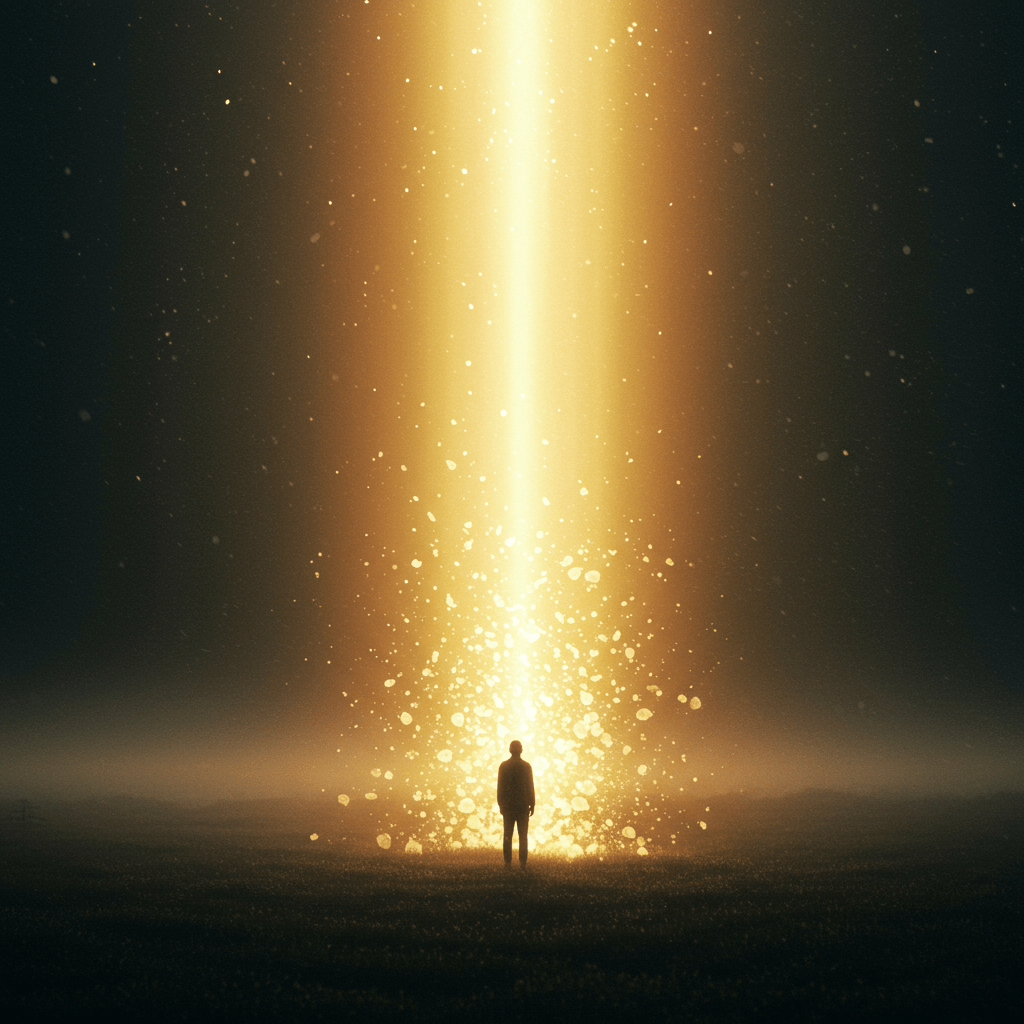
Un’alterità mi ha teso la mano, entrando in questo spazio di coscienza allargato, quasi infinito, nel quale si è riversato questo amore. In quell’attimo, quella luce, quella presenza, quel calore erano lì per guarirmi. Gratuitamente. Senza essere stata implorata o supplicata.
Era la Madre.
Ovviamente ho razionalizzato in fretta, ho chiuso tutte le finestre e le porte che potevo chiudere. Se ci lasciamo andare a questa esperienza, non è “normale”, non è “accettabile”. Ma l’esperienza è rimasta. Ha avuto un inizio, ha avuto una fine. Il momento dopo io sapevo qualcosa che prima non sapevo: che questa cosa era possibile. Questa esperienza spirituale di vicinanza era possibile e aveva uno scopo che andava studiato, compreso.
Il background di esperienze mistiche
Non sono un novellino delle esperienze spirituali. Ho già avuto esperienze mistiche di diffusione col presente durante i miei studi delle scuole orientali, in particolare del buddismo tibetano. Mi è capitato di raggiungere uno stato di calma talmente profondo in cui il momento presente acquisiva un’indistinta presenza di ogni cosa attiva e viva – frutto di decenni di meditazione che porto avanti da quando avevo 17-18 anni (ora ne ho 53).
Mi si erano già aperte porte in passato. Anche di recente, durante un tuffo nel soleggiato Salento, mi era capitato di sentire che la barriera fra me e il mondo diventava inesistente. Quindi non ero nuovo a esperienze profonde di connessione o di sblocco di parti di me.
La differenza di Medjugorje
Ma in questo caso era molto diverso perché rispondeva a un codice. Io ero lì a pregare la Madre, e ho consentito alla Madre di palesarsi nella sua grazia. Per grazia di Dio, essa ha potuto tendere la mano nel buio di quel bosco per rincuorare il bambino disperso.
Questa non è stata un’unica esperienza, ma l’inizio di un dialogo che è durato e si è ripresentato in modo sensibile in altri giorni. Siamo stati richiamati lì – io e mia moglie abbiamo consciamente o inconsciamente riprogrammato un viaggio per tornarci, capitando nel bel mezzo della festa dei giovani, nell’anno del Giubileo.
Il codice della tradizione
Se quella sensazione di accoglienza che ho provato a Medjugorje – dove l’idea centrale è quella della Madre, della Gospa, della Madonna che ci chiama per portarci al Figlio – corrisponde all’emozione vissuta, allora il codice, la storia presente in quel luogo, confermano il sentirsi amati in un luogo deputato all’accoglienza e all’amore. È come andare al cinema per vedere un film sui supereroi e vedere proprio un film sui supereroi: non si tratta più solo di un’esperienza individuale, ma diventa collettiva, qualcosa che va oltre il singolo verso l’unità.
I frutti dell’esperienza
Valutando il contesto creato dalle apparizioni – nella cui bolla non posso avere opinione diretta – il contesto è di intensa fede e speranza. Anche immaginando che ad apparire non sia la Madonna (cosa che personalmente non credo), il progetto del nemico starebbe fallendo su tutta la linea, perché l’effetto collaterale di queste apparizioni va nella direzione decisamente opposta alla perdizione.
Se vale il detto evangelico “dai frutti li riconoscerete”, i frutti lì sono tutt’altro che negativi. Non si fa altro che pregare la Madonna e Gesù Cristo. Se anche fosse un progetto malvagio, starebbe fallendo da più di quarant’anni.
L’ortodossia e la tradizione
Io credo veramente che seguire in modo rigoroso i capisaldi di una tradizione così ben radicata sia condizione necessaria – non si può fare un cristianesimo alla carta. Ci sono cose difficili da digerire, complicate da armonizzare con la propria visione, ma è una ricetta che, con mille variazioni, esiste da duemila anni. Parla dell’essenza stessa di ciò che siamo, dell’essenza stessa di cos’è il mondo.
In questo codice, avere come riferimento la figura della Madre come corredentrice, come anello di congiunzione verso Dio da cui tutte le grazie discendono, ha reso possibile che la Madre si mostrasse a me in questo modo.
La chiamata personale
La mia esperienza non è un dogma, non è qualcosa che deve essere così per tutti. Dio parla in modo diverso a ciascuno di noi. Lo spirito che ci abita risponde, ci aiuta a rispondere a questa chiamata in modo diverso. Non focalizzatevi sulla mia descrizione dell’esperienza – potrebbe essere un elemento distrattivo.
Quello che conta è che le esperienze hanno un inizio e una fine, ma ciò che rimane è il significato che si dà alla propria vita e come questo viene tradotto nell’esistenza quotidiana. La religione non è altro che un codice, un libro che ci racconta il linguaggio con il quale possiamo entrare in connessione con questa realtà sempre presente, sempre disponibile, che attende solo che lasciamo cadere i nostri freni per inondarci del suo amore.
ENGLISH
My Experience at Medjugorje: When the Mother Manifests
What is a Spiritual Experience?
Let’s start with the premise that for me, Medjugorje was an intense and prolonged spiritual experience. But to truly understand what I mean, we must first clarify what “spiritual experience” means.
For many of us, a spiritual experience is something that goes beyond the human, something transcendent. The problem is that, by existing on this side of the transcendent, in our daily lives, we often idealize what lies beyond as something we have never felt before, something that must necessarily be off the charts. In this way, we deceive ourselves.
Spiritual experiences that have a beginning, an end, and a meaning will necessarily pass through our senses and our ability to be conscious of things. They will never appear to us as spiritual experiences if we continue to place them outside the realm of our direct experience. If we make them absolutely transcendent and idealize them, nothing will ever be a spiritual experience.
The Trap of Idealization
It’s a trap I’ve experienced firsthand and one I recognize in many people who, like me, have studied and explored Eastern cultures with the idea of enlightenment as an event that lies beyond what can be perceived. In reality, it is a comprehension of the limitation and completeness of objective experience in order to realize what lies beyond—but we are not talking about Mars or Jupiter in relation to our earthly experience.
A spiritual experience should not be considered something outside of our daily lives. Otherwise, we will continue to view everything that happens to us as mundane, leaving an idealized space for spiritual experiences that will forever remain empty. We are, if we believe this representation, not only a body and a mind but also a spirit or a soul. It is something that concerns us in the completeness of who we already are.
Recognizing the Spirit in the Everyday
We don’t need to add a sense to ourselves that didn’t exist before in order to touch, see, or feel a spiritual experience. We must learn to recognize it. It’s about becoming more refined, more subtle in sifting through our daily experience to recognize the signs of something spiritual within it.
If we consider the existence of a creator spirit, of an intelligence at work in the universe, we must understand that this intelligence, being present throughout the universe, is also present within ourselves. A small piece of this capacity that permeates all things is also inside us. When we talk about a spiritual experience, we are talking about connecting with this part that necessarily already exists and with which we have already come into contact simply by the fact that we exist.
Life as a Bridge to the Divine
If we wanted to draw a parallel between what God is and what life is, we can begin to think that life exists within us and that this life is intelligent. This life is organizing nature, molecules, plants, animals, and ourselves. If we think it’s not merely a random deterministic mechanism but a project at work with a function and a direction, then we can more easily conceive of a God, a spirituality that dwells within us.
We recognize a work, an architect, and in this architect—since we are part of the work—a bit of this architect is also present within us. Spirituality makes it possible to get in touch with this part, but we must know how to recognize it.
The Arrival in Medjugorje
I arrived in Medjugorje not as a skeptic, but as a neutral observer. I went thanks to my wife’s desire to return there. I am not a novice to Marian shrines or great places of prayer. I had my most important experiences when I was young—as a stretcher-bearer in Lourdes, but I have also been to Fatima and various other places around Europe where the distance between heaven and earth seems to be thinner.
Medjugorje presents a difficult situation to digest. It is the place where the Madonna is said to appear regularly for more than forty years to the same visionaries—a unique phenomenon in the Christian-Catholic landscape. I understand well that the Church maintains its distance, though it’s becoming less so, from these phenomena of which there is no certainty. I arrived neutrally because I knew I was approaching something that could lead to fanaticism or a very sensationalized faith.
The Moment of the Turning Point
I found myself, I believe on the first or second day of my first trip to Medjugorje, in the evening during the rosary before Mass, a little distracted in my thoughts as usual. It’s difficult to stay focused on prayer the entire time, especially for a person who, up to that point, didn’t recognize in the rosary what they would later rediscover.
While I was praying the rosary, at a certain point I felt like letting go of the brakes. The best image is that up to that point I had been driving with the handbrake on. I was surprised to realize I wanted to let go of the force with which I was holding the door closed.
The Wave of Welcome
I let go and was immediately flooded with a wave of emotion, of feeling, so intense that I could no longer contain it. I was in the midst of people I didn’t know, raised as a boy who shouldn’t cry, a person who, like so many, has difficulty relating to their inner beasts.
In that moment, when I let go, I realized I was letting go of much more than simple rational control over my thoughts. I felt a dam break inside me, and something that was outside that dam poured in.
I was filled with a welcome, an acceptance that was alien to me. As if an ancient desire to be found had finally been realized. As if I had been lost in a forest as a child and had now given up on the possibility that there were other people in the forest who were not threatening, but who would even welcome me.
The Presence of the Mother
An otherness reached out to me, entering this widened, almost infinite space of consciousness, into which this love poured. In that instant, that light, that presence, that warmth were there to heal me. Freely. Without having been implored or begged.
It was the Mother.
Obviously, I quickly rationalized it, closing all the windows and doors I could. If we let ourselves go to this experience, it’s not “normal,” it’s not “acceptable.” But the experience remained. It had a beginning, it had an end. The moment after, I knew something I didn’t know before: that this thing was possible. This spiritual experience of closeness was possible and had a purpose that needed to be studied and understood.
The Background of Mystical Experiences
I am not a novice to spiritual experiences. I have already had mystical experiences of diffusion with the present during my studies of Eastern schools, particularly Tibetan Buddhism. I happened to reach a state of calm so profound that the present moment acquired an indistinct presence of everything active and alive—the result of decades of meditation that I have been doing since I was 17-18 years old (I am now 53).
Doors had already opened for me in the past. Even recently, during a swim in sunny Salento, I had the experience of feeling that the barrier between me and the world became nonexistent. So I was not new to profound experiences of connection or unlocking parts of myself.
The Difference in Medjugorje
But in this case it was very different because it responded to a code. I was there praying to the Mother, and I allowed the Mother to manifest herself in her grace. By the grace of God, she was able to reach out into the darkness of that forest to comfort the lost child.
This was not a single experience, but the beginning of a dialogue that lasted and reappeared in a tangible way on other days. We were called back there—my wife and I consciously or unconsciously rescheduled a trip to return, happening to be in the middle of the youth festival, in the Jubilee year.
The Code of Tradition
If the feeling of welcome that I felt in Medjugorje—where the central idea is that of the Mother, the Gospa, the Madonna who calls us to bring us to the Son—corresponds to the emotion experienced, then the code, the history present in that place, confirms the feeling of being loved in a place dedicated to welcome and love. It’s like going to the cinema to see a superhero movie and actually seeing a superhero movie: it’s no longer just an individual experience, but it becomes collective, something that goes beyond the individual towards unity.
The Fruits of the Experience
Evaluating the context created by the apparitions—in whose bubble I cannot have a direct opinion—the context is one of intense faith and hope. Even imagining that it’s not the Madonna who is appearing (which I personally do not believe), the enemy’s project would be failing completely, because the side effect of these apparitions goes in the decidedly opposite direction of perdition.
If the Gospel saying “by their fruits you will know them” holds true, the fruits there are anything but negative. All they do is pray to the Madonna and Jesus Christ. Even if it were an evil project, it would have been failing for more than forty years.
Orthodoxy and Tradition
I truly believe that rigorously following the cornerstones of such a well-rooted tradition is a necessary condition—you cannot have à la carte Christianity. There are things that are difficult to swallow, complicated to harmonize with one’s own vision, but it is a recipe that, with a thousand variations, has existed for two thousand years. It speaks of the very essence of what we are, of the very essence of what the world is.
In this code, having the figure of the Mother as a co-redemptrix, as a link to God from whom all graces descend, made it possible for the Mother to show herself to me in this way.
The Personal Calling
My experience is not a dogma, not something that must be so for everyone. God speaks in a different way to each of us. The spirit that inhabits us responds, helps us to respond to this calling in a different way. Do not focus on my description of the experience—it could be a distracting element.
What matters is that experiences have a beginning and an end, but what remains is the meaning one gives to their life and how this is translated into daily existence. Religion is nothing more than a code, a book that tells us the language with which we can connect with this reality that is always present, always available, waiting only for us to drop our brakes so it can flood us with its love.
 Alberto Giordano Verso
Lascia un commento