Riassunto puntate precedenti:
Chiacchierata su questo articolo:
C’era una volta…
Abbiamo percorso molta strada insieme, esplorando concetti per me fondamentali, spesso dati per scontati o completamente ignorati. Abbiamo messo in luce come, alla radice di ogni cosa, ci sia la coscienza: quella che si accende ogni mattina e vive la nostra esperienza quotidiana, pur non appartenendo né al mondo esterno (corpo, materia) né a quello interno (mente, inconscio, memoria).
Questo è il Punto Zero: uno spazio intermedio tra i “tre mondi”, abitato dalla coscienza.
A partire da questa consapevolezza, ci siamo confrontati con una questione cruciale: che cosa siamo davvero?
Abbiamo compreso che la nostra vita è immersa in una narrazione costante, colorata dalle nostre credenze su noi stessi e sul mondo. Ma non conosciamo né noi stessi né il mondo in modo oggettivo: percepiamo piuttosto una realtà distorta, filtrata dai limiti dei sensi, dalla memoria e – soprattutto – dalla nostra narrazione interiore.
La narrazione comune ci dice che siamo una mente rinchiusa in un corpo, padroni dei nostri pensieri e delle nostre azioni.
Ma questa visione, a mio avviso, è fallace. Ci illudiamo di “generare” pensieri nel presente, quando in realtà essi sono perlopiù il frutto di esperienze e condizionamenti passati. Finché ci crediamo al timone della nostra vita, restiamo paradossalmente meno liberi, manovrati dall’inconscio e dalle circostanze esterne.
Questa illusione ci intrappola in un sogno, in una simulazione: confondiamo la narrazione con la realtà.
Eppure, la narrazione – per sua natura – può cambiare. Può persino migliorare.
La sofferenza della vecchia narrazione
È proprio da questa narrazione che nasce la nostra sofferenza esistenziale.
È come essere amanti del dolce in un mondo di snack salati: sentiamo una sete profonda di pace, libertà e felicità duratura, che i due mondi – interno ed esterno – non possono saziare.
Anzi, quando questa sete è fraintesa, può sfociare in angoscia, depressione, persino disperazione, in chi non riesce a vedere “nient’altro oltre”.
Ed è qui che nasce il bisogno di una nuova narrazione.
Il Punto Zero come fondamento
Questa nuova narrazione comincia dal riconoscere che non siamo il corpo né la mente, almeno non nel modo in cui siamo abituati a concepirli.
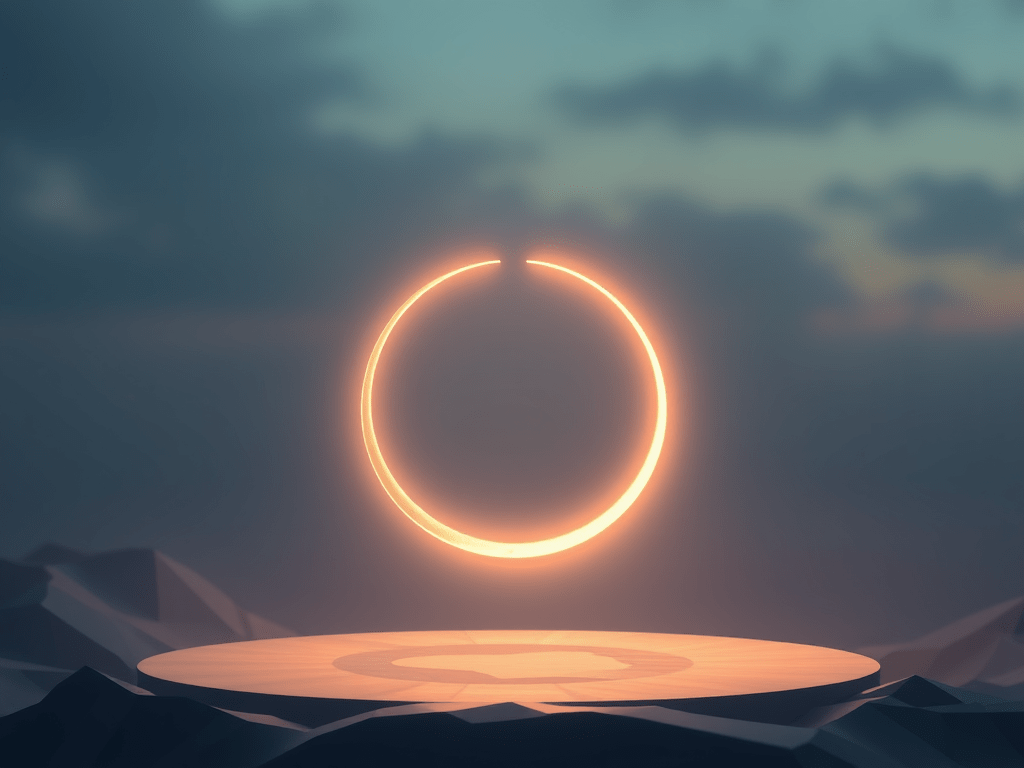
Siamo lo spazio di coscienza in cui l’esperienza accade: una mezzaluna di luce posta tra il mondo esterno, quello interno e quello spirituale.
Non siamo ciò che vediamo, pensiamo o sentiamo, ma ciò che è consapevole di tutto questo.
Questa coscienza non ha nome, sesso, né storia personale: quelle sono solo etichette.
Riconoscere il Punto Zero è fare un passo indietro senza muoversi. È purificare lo sguardo e riscoprire che la nostra vera natura è libertà.
La sete come bussola
In questa nuova narrazione, la sete non è più un problema da eliminare, ma una bussola.
Se c’è sete, esiste anche l’acqua capace di dissetarla.
E quest’acqua non appartiene né al mondo interno né a quello esterno. Viene da un’altra dimensione: un mondo spirituale.
Il Punto Zero diventa quindi lo spazio privilegiato per entrare in contatto con quel mondo.
Per me, questa sete è l’impronta divina dentro di noi, la voce silenziosa con cui Dio ci chiama a Sé.
La Metanoia: una trasformazione radicale
Questa trasformazione non è solo teorica: è una metanoia, un cambio radicale del modo di vedere e vivere.
Nasce proprio nel Punto Zero. Significa passare dal vedere per credere al credere per vedere.
Questo cambia tutto: valori, priorità, relazioni, e persino il nostro rapporto con Dio e con noi stessi.
È un ritorno a casa: dove le esperienze di vita assumono un significato nuovo, più profondo.
L’umiltà come soglia
L’umiltà, intesa come il riconoscimento del nostro bisogno di Dio e come resa silenziosa, diventa la porta d’accesso al Punto Zero e, da lì, al Regno dei Cieli.
Non è una modestia di facciata, ma un vero distacco dall’ego e dagli attaccamenti. Una piccola morte interiore che apre alla rinascita.
In sintesi
La nuova narrazione è il cammino che ci porta fuori dal sogno dell’identità limitata, per riconoscerci come pura coscienza e libertà, radicati nel Punto Zero.
È seguire la nostra sete profonda verso un mondo spirituale, in un processo di trasformazione interiore che cambia il senso stesso della vita.
C’era una volta un “io”…
C’era una volta un “io” piccolo, separato, chiuso nella scatola cranica di un corpo mai abbastanza perfetto.
Una coscienza che si identificava in una storia fatta di fatiche, piccole gioie e delusioni, in un mondo dove ogni approdo era solo temporaneo e la morte sembrava l’unica certezza.
Finché, stremata, quella coscienza non si fermò in riva a un lago.
E lì capì: non sono ciò che mi accade. Non sono ciò che sento. Sono ciò che sente il sentire.
Scoprì di non essere un nome, né una storia. Ma un campo di coscienza, in cui oggetti di esperienza appaiono e con cui si può interagire.
E quella sete, così misteriosa, sembrava non appartenere né al “dentro” né al “fuori”.
Era lì, ma non era nata dalla coscienza. Eppure vi dimorava.
La rivelazione
In quella mezzaluna di luce – la vera casa della coscienza – non giungono solo oggetti del mondo interno o esterno.
Esiste un altrove: un reame spirituale, da cui provengono “oggetti” con cui possiamo entrare in contatto.
A quel punto, la coscienza è posta davanti a una scelta:
- Cercare risposte frammentarie, componendo una spiritualità “à la carte”;
- Oppure rivolgersi a una tradizione viva, a una religione strutturata che offra strumenti e cammino.
Ed è così che, nella nuova narrazione, la coscienza parte per un viaggio.
Un viaggio in un mondo del tutto nuovo.
ENGLISH
The Three Worlds and Consciousness
Once Upon a Time…
We’ve come a long way together, exploring concepts that, while fundamental to me, are often taken for granted or even ignored. We’ve highlighted how, at the base of everything, there exists our consciousness, which awakens every morning and lives our life experience, yet knows it doesn’t belong to the two worlds in which it manifests: the external one (body-matter) and the internal one (mind-unconscious-memory). This is the Zero Point, that intermediate state among the “three” worlds, inhabited by consciousness.
Starting precisely from this awareness of the Zero Point, we’ve addressed a crucial question, given that, ultimately, we don’t exactly know what we are. We’ve discovered that our life is constantly immersed in a narrative, colored by our beliefs about ourselves and the world. In reality, however, we don’t know ourselves or the world objectively; rather, we perceive a strongly distorted representation of reality, influenced by the limits of our senses, memory, and, above all, by our inner narrative.
The old narrative, the common one, leads us to believe we are a mind or consciousness enclosed in a body, masters of our thoughts and actions. But this idea, in my opinion, is fallacious. We delude ourselves into thinking we “make” thoughts in the here and now, when in reality they are products of what is already written within us, mostly the result of past experiences and conditioning. As long as we consider ourselves “commanders at the helm” of our lives, we are paradoxically less free, puppets at the mercy of the unconscious and external circumstances. This illusion traps us in a kind of “dream” or “simulation“, mistaking the narrative for reality.
But it is a narrative, and narratives, as we know, can change. Even improve.
The Suffering of the Old Narrative
It is precisely from this old narrative that our existential suffering arises. It’s like being “sweet lovers in a world of salty snacks”: we have a deep thirst for lasting peace, freedom, and happiness, yet neither the external nor the internal world can truly satisfy it. Indeed, when this thirst is misunderstood, it can lead to anxiety, depression, even despair in those who see “nothing else beyond.”
And it is here that the need for a new narrative arises.
Zero Point as Foundation
This new narrative begins with the recognition that we are neither the body nor the mind, at least not in the way we’ve been accustomed to understanding them. We are the space of consciousness in which experience unfolds – a crescent of light positioned between the external, internal, and spiritual worlds. We are not what we see, think, or feel, but rather that which is aware of all this.
This consciousness itself has no name, gender, or personal history – those are just labels. Recognizing the Zero Point means taking a step back without moving. It is purifying our perception and rediscovering that our true nature is freedom.
Thirst as a Compass
In this new narrative, thirst is no longer seen as a problem to be eliminated, but as a compass. If there is thirst, there must also be water capable of quenching it.
And this “water” belongs neither to the internal nor the external world. It comes from another dimension: a spiritual realm. The Zero Point thus becomes the privileged space where we can come into contact with that realm.
For me, this thirst is the divine imprint within us – the silent voice with which God calls us to Himself.
Metanoia: A Radical Transformation
This transformation is not merely theoretical: it is metanoia – a radical change in how we see and live reality. It arises precisely at the Zero Point. It means moving from “seeing to believe” to “believing to see“.
This changes everything: our values, our priorities, our relationships – even our connection with God and ourselves. It is a return home, where life’s experiences take on a new and deeper meaning.
Humility as a Threshold
Humility – understood as the recognition of our need for God and as a silent surrender – becomes the gateway to the Zero Point and, from there, to the Kingdom of Heaven. It is not false modesty, but a true detachment from the ego and worldly attachments – a small inner death that opens the way to rebirth.
In Summary
The new narrative is the path undertaken to escape the dream of a limited identity, towards the recognition of our true nature as pure consciousness and freedom, rooted in the Zero Point. It is the way to follow our deep thirst towards a spiritual world, in a process of profound inner transformation that redefines the very meaning of life.
Once upon a time, a “self”…
Once upon a time, a small, separate “self,” enclosed in the cranial box of a body that was never quite perfect. A consciousness that identified with a story made of effort, fleeting joys, and disappointments – in a world where every safe harbor was temporary, and death seemed the only certainty.
Until, exhausted, that consciousness rested by the edge of a lake. And there, it understood: “I am not what happens to me. I am not what I feel. I am what feels the felt.”
It discovered that it was not a name, nor a story – but a field of consciousness within which objects of experience appear and with which it could interact. And that mysterious thirst seemed to belong neither to the “inside” nor the “outside.”
It was there, but not created by consciousness. Yet, it dwelled within it.
The Revelation
Within that crescent of light – the true home of consciousness – not only do objects from the internal or external world appear. There exists an elsewhere: a spiritual realm, from which “objects” arrive with which we can come into contact.
At that point, consciousness faces a choice:
- To seek scattered answers, composing a “do-it-yourself” spirituality;
- Or to turn to a living tradition, a structured religion that offers tools and a path.
And so, in the new narrative, consciousness embarks on a journey into a completely new world.
 Alberto Giordano Verso
Lascia un commento