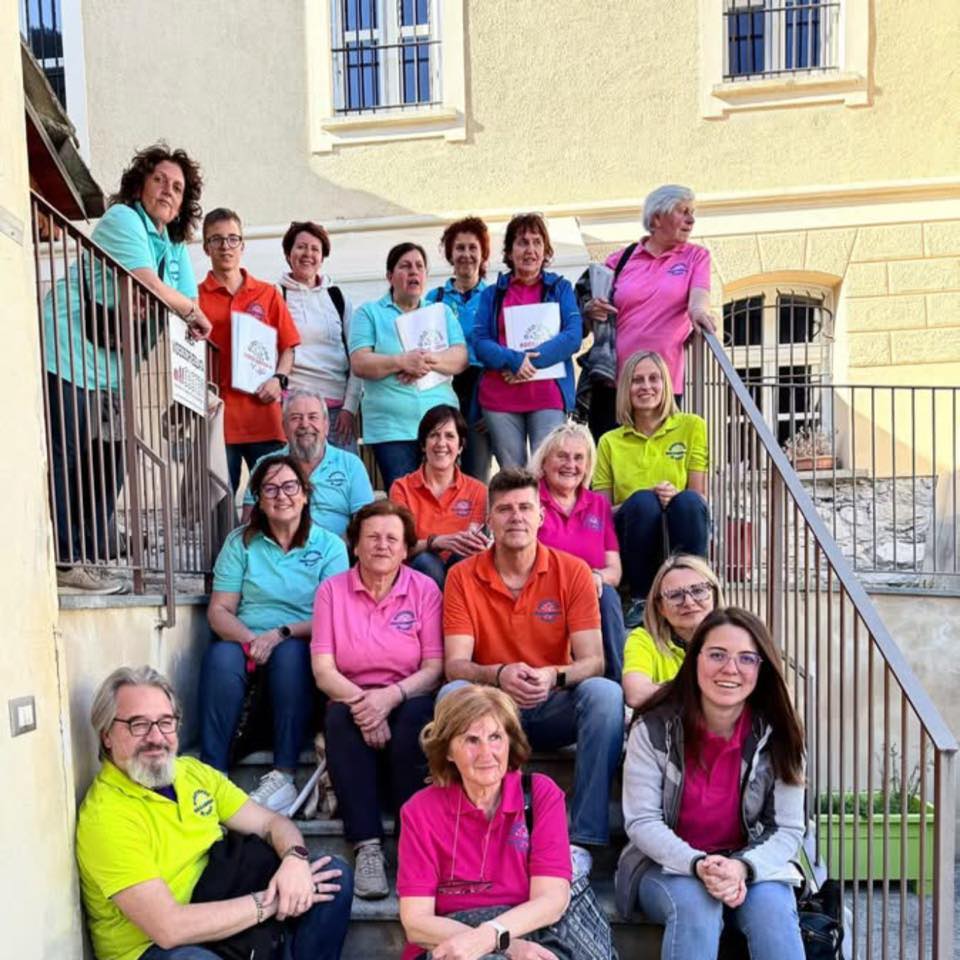
Ieri ho vissuto un’esperienza davvero speciale. Ho avuto l’opportunità di unirmi al coro “Il Girotondo di Voci” di Roccabruna per una piccola esibizione molto toccante. Siamo andati a cantare per gli ospiti della casa di riposo di Stroppo.
Il coro “Il Girotondo di Voci” è un gruppo davvero affiatato e accogliente. Mi hanno fatto sentire subito parte della famiglia, e cantare con loro è stato un vero piacere. Il repertorio era vario, con canzoni popolari della tradizione locale e qualche brano più moderno, tutti scelti per allietare il pubblico.
È troppo banale e scontato vedere questo gesto, questa esperienza, come un gesto generoso di attenzione per gli altri, per chi ha bisogno. Assolutamente no.
Non è questa la chiave con cui vederla, trovo stucchevole e molto parziale limitare la visione alla superficiale bontà. Certo, sono consapevole che, tra le altre cose, questa piccola esibizione abbia portato allegria e novità dove magari uno scorrere quotidiano del tempo potrebbe aver portato una routine. Ma non abbiamo salvato nessuno e non abbiamo fatto nessun gesto eclatante. Niente di paragonabile al lavoro di ogni giorno che operatori e parenti svolgono per gli ospiti di questo bel ricovero incastonato nella Valle Maira.
La prospettiva attraverso cui vorrei raccontare la giornata è invece di carattere spirituale. Lasciate ogni speranza, voi che leggete.
Il punto è che noi, poveri esseri umani, siamo persi e dispersi su questo pianeta, l’unica bussola che abbiamo è amarci, prenderci cura gli uni degli altri. In un apparente vuoto di senso, in un’esistenza contraddittoria e problematica, non possiamo trovare attraverso i nostri sensi, attraverso la nostra logica, un senso a tutto quanto.
È per questo che ci spaventa la morte e, forse ancora di più, la malattia, soprattutto quella che ci porta a una degenerazione cerebrale. Ecco la preziosità del visitare gli ospiti di una struttura come quella di Stroppo. Troppo spesso, proprio per regalarci un’apparente sensatezza nella vita, rimuoviamo psicologicamente (senza mai avere davvero successo) la morte e la malattia dalla nostra vita. Il trucco funziona solo fino a quando queste irromperanno nella nostra vita e ci sorprenderanno traumatizzandoci. È inevitabile.
Perché definire preziosa l’esperienza di visitare un ricovero, allora? Perché trovarsi faccia a faccia con quello che pare normale “rimuovere” dalla nostra vita è un valore? Non certo perché “esponendosi” al dolore in qualche modo ci si possa rafforzare e indurire. Non ci si prepara alla morte e alla malattia per “sovraesposizione”, nel tentativo di anestetizzarci. No, tutt’altro.
Francesco chiamava la morte “sorella” e sempre “sorella” noi potremmo chiamare la demenza. Il vero valore, almeno per me, di incontri come quello di ieri sta nel vedere che siamo tutti fratelli. Dai super intellettuali a chi a stento trattiene la saliva. Non c’è nessuna differenza. Peccatori noi, peccatori loro. Fratelli.
Lo ho capito bene quando, cantando le “hit” dei loro tempi (pescate un po’ dalla cultura popolare e un po’ dai successi sanremesi degli anni 50-60-70), li vedevi riaccendersi. La loro corteccia cerebrale “riconosceva” le note, il contesto, le parole di quelle canzoni e riattivava circuiti di memorie passate cui sono collegate belle sensazioni, bei ricordi.
E nel riaccendersi di quel fuoco ho potuto vedere l’eco di belle gioie perdute, di esperienze di condivisione passate tornare presenti. Un rituale collettivo nel quale si evocavano speranze, allegrie passate che tornavano vive e presenti davanti a noi. Non c’è nessun merito in chi come me stava cantando, ma solo l’opportunità di vivere con loro il ricordo di quelle gioie.
Qualche stolto potrebbe pensare che non vi sia molto di reale nel riattivare in persone anziane con problemi di demenza il ricordo “quasi automatico” di quei fuochi di speranza. Qualcuno potrebbe pensare che sia illusorio riportare in luce per un breve pomeriggio la vita che quei corpi quasi dimenticano ogni giorno di più.
Quelle gioie sono illusione tanto quanto le nostre da sani di mente oggi. Domani saremo come loro. No, la preziosità sta invece nel trovare una connessione tra le nostre vite oggi e le loro vite di ieri in un presente vitale e allegro fatto di canzoni. Quei fuochi altro non sono che luci sul fondo della caverna che tutti vediamo, fiamme di gioia e felicità a cui tutti vogliamo aggrapparci perché quando c’è la gioia la notte sembra meno buia e spaventosa.
Siamo tutti dispersi su questa terra e abbiamo solo una bussola che ci guida. Vogliamo andare verso la luce, vogliamo stare al caldo tepore dell’affetto. E la musica può riattivare in noi, per qualche minuto, quella fiamma.
Non basta, però, c’è ancora molto altro. Abbiamo la possibilità di amare e riconoscerci nei fratelli sofferenti, sono come noi. Hanno nel cuore una chiamata alla gioia, all’amore, esattamente come noi. E nel rifletterci gli uni negli altri non facciamo altro che ritrovare quella bussola. La stessa bussola per tutti.
La bussola è la capacità di vedere al di là della corruttibilità dei nostri corpi, al di là della vacuità dei nostri sogni, un sole, un’aspirazione all’assoluto, al senza tempo, alla perfetta grazia.
Un polo nord senza il quale saremmo poco più che scimmie che si prendono lodevolmente cura le une delle altre in attesa di morire e scomparire per sempre nei flutti del tempo.
Invece vive in noi qualcosa di più grande e lo possiamo vedere nella testarda voglia di tornare a sperare e a gioire di chi sente riaccendersi in sé il ricordo di gioie passate, di fuochi d’amore. E tutto torna vivo in noi in un’esperienza collettiva d’amore.
Sarebbe facile dire che è più quanto danno a te queste persone di quanto tu dia a loro. Sarebbe riduttivo e ipocrita. Grazie a queste esperienze, molto più grandi di noi, è possibile alzare gli occhi al cielo, verso quella cosa che regge le stelle e i pianeti. Riecheggia in noi allora soltanto uno spirito di ringraziamento, una gioia che non ha un nome, un grazie vissuto insieme ai fratelli, tutti avvolti in un’unica grande preghiera vivente.
ENG:
Yesterday, I had a truly special experience. I had the opportunity to join the choir “Il Girotondo di Voci” (The Circle of Voices) from Roccabruna for a very moving small performance. We went to sing for the guests of the nursing home in Stroppo.
The choir “Il Girotondo di Voci” is a truly close-knit and welcoming group. They immediately made me feel part of the family, and singing with them was a real pleasure. The repertoire was varied, featuring popular local traditional songs and some more modern pieces, all chosen to entertain the audience.
It’s too simplistic and obvious to view this gesture, this experience, as a generous act of attention towards others, towards those in need. Absolutely not.
This isn’t the key to understanding it; I find it cloying and very biased to limit the view to superficial kindness. Of course, I am aware that, among other things, this small performance brought joy and novelty where perhaps a daily routine might have settled in. But we didn’t save anyone, and we didn’t perform any sensational act. Nothing comparable to the daily work that operators and relatives do for the guests of this beautiful shelter nestled in the Maira Valley.
The perspective through which I would like to recount the day is, instead, spiritual. Abandon all hope, you who read.
The point is that we, poor human beings, are lost and scattered on this planet; the only compass we have is to love each other, to take care of one another. In an apparent vacuum of meaning, in a contradictory and problematic existence, we cannot find meaning in everything through our senses, through our logic.
This is why death frightens us and, perhaps even more, illness, especially that which leads to brain degeneration. Hence the preciousness of visiting the guests of a facility like Stroppo’s. Too often, precisely to give ourselves an apparent meaningfulness in life, we psychologically remove (without ever truly succeeding) death and illness from our lives. The trick only works until these burst into our lives and traumatize us by surprise. It’s inevitable.
Why, then, define the experience of visiting a nursing home as precious? Why is facing what we normally “remove” from our lives valuable? Certainly not because “exposing” oneself to pain somehow strengthens and hardens one. One does not prepare for death and illness through “overexposure” in an attempt to anesthetize oneself. No, quite the opposite.
Francis called death “sister,” and we could always call dementia “sister.” The true value, at least for me, of encounters like yesterday’s lies in seeing that we are all brothers and sisters. From super intellectuals to those who can barely hold their saliva. There is no difference. We are sinners, they are sinners. Brothers and sisters.
I understood this well when, singing the “hits” of their time (drawn a bit from popular culture and a bit from Sanremo successes of the 50s, 60s, and 70s), you could see them light up again. Their cerebral cortex “recognized” the notes, the context, the words of those songs and reactivated circuits of past memories to which beautiful sensations, beautiful memories, are connected.
And in the rekindling of that fire, I could see the echo of beautiful lost joys, of past shared experiences returning to the present. A collective ritual in which hopes, past joys, were evoked, coming alive and present before us. There is no merit in those of us who were singing, but only the opportunity to experience with them the memory of those joys.
Some fools might think that there is not much real in reactivating in elderly people with dementia problems the “almost automatic” memory of those fires of hope. Someone might think it is illusory to bring to light for a brief afternoon the life that those bodies almost forget more each day.
Those joys are as illusory as our joys today, being of sound mind. Tomorrow we will be like them. No, the preciousness lies instead in finding a connection between our lives today and their lives of yesterday in a vital and joyful present made of songs. Those fires are nothing more than lights at the bottom of the cave that we all see, flames of joy and happiness to which we all want to cling because when there is joy, the night seems less dark and frightening.
We are all scattered on this earth, and we only have one compass to guide us. We want to go towards the light, we want to stay in the warm embrace of affection. And music can reactivate that flame within us for a few minutes.
But it’s not enough; there’s still much more. We have the opportunity to love and recognize ourselves in suffering brothers and sisters; they are like us. They have a call to joy, to love, in their hearts, exactly like us. And by reflecting in each other, we only rediscover that compass. The same compass for everyone.
The compass is the ability to see beyond the corruptibility of our bodies, beyond the emptiness of our dreams, a sun, an aspiration to the absolute, to the timeless, to perfect grace.
A North Pole without which we would be little more than monkeys laudably taking care of one another, waiting to die and disappear forever into the currents of time.
Instead, something greater lives within us, and we can see it in the stubborn desire to hope and rejoice again in those who feel the memory of past joys, of fires of love, rekindling within them. And everything comes alive within us in a collective experience of love.
It would be easy to say that these people give you more than you give them. That would be reductive and hypocritical. Thanks to these experiences, much greater than ourselves, it is possible to look up to the sky, towards that which holds the stars and planets. Then only a spirit of gratitude echoes within us, a joy that has no name, a thanks experienced together with our brothers and sisters, all enveloped in one great living prayer.
 Alberto Giordano Verso
Lascia un commento